Introduction: A New Era of Smarter Advertising
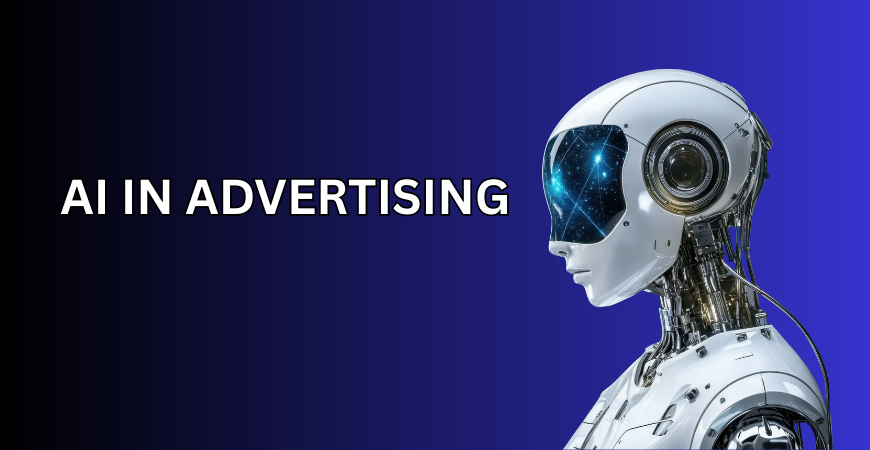
We are living in a time where technology no longer just supports marketing—it actively shapes it. One of the most transformative forces behind this shift is ai in advertising, which has changed how brands communicate, compete, and connect with audiences.Instead of depending solely on experience, marketers today use data and instant insights to guide decisions..
Advertising today is no longer about speaking loudly to reach the masses.Today, advertising isn’t about talking to everyone—it’s about connecting with the right individual at the perfect moment. This change happened gradually, as people’s behaviors evolved and digital channels multiplied. Intelligent systems made keeping up much easier.
In the first few years of digital marketing, advertisers were excited simply to reach people online. Today, that is no longer enough. People expect relevance, personalization, and value. They skip ads that feel generic and engage with those that feel personal. Ai in advertising plays a central role in meeting these expectations without overwhelming marketing teams..
The Evolution of Advertising in the Age of Intelligence
To really get where we are today, it helps to take a quick look back at the past. Traditional advertising followed a linear path: create a message, choose a channel, and hope it resonates. Feedback was slow, and adjustments were often based on limited data. Even early digital advertising followed a similar pattern, just with better tracking.
The introduction of ai in advertising marked a turning point. Instead of waiting weeks to understand performance, brands could analyze results in real time. Algorithms began identifying patterns that humans could easily miss, such as subtle shifts in user intent or emerging audience segments.
This shift has also changed the way decisions get made. Media buying, creative testing, and audience targeting were once handled separately. Intelligent systems now connect these elements, creating a feedback loop where each campaign learns and improves continuously. According to industry reports, companies using AI-powered optimization see conversion rate improvements of 20–30% compared to manual methods. For many digital marketing agencies, this shift has transformed the way they think. They plan, execute, and optimize campaigns. It allows them to deliver smarter results for clients without relying on guesswork..
More importantly, this evolution reflects a broader cultural change. Consumers now connect with brands across multiple channels, from social networks and search to apps and emails. Handling it all manually is no easy task. Ai in advertising acts as the connective tissue, making sense of fragmented data and turning it into actionable insights.
Data: The Foundation That Powers Smarter Advertising
At the heart of intelligent advertising lies data. Every click, scroll, pause, and purchase generates information. On its own, this data is overwhelming. Interpreting it meaningfully requires systems that can learn, adapt, and predict.
Ai in advertising excels at turning raw data into understanding. It can analyze millions of data points in seconds, identifying correlations that would take human analysts weeks or months to uncover. For example, AI can detect that a certain type of message works better during specific times of day or that a particular audience responds differently depending on the platform.
What makes this approach truly powerful isn’t just how fast it works, but how deeply it understands people. Intelligent systems don’t look at just one type of data. They bring together demographic details, browsing behavior, and real-time context to show a clearer picture of what users actually care about. This helps advertisers go beyond basic targeting and better understand the reasons behind people’s actions. The same insights are also shaping web design and development, where websites are built around real user behavior instead of assumptions.
Statistics highlight this shift clearly.According to a McKinsey study, organizations that rely on data are 23 times more likely to gain new customers and six times more likely to keep them. . Ai in advertising enables this advantage by transforming data into strategy rather than letting it sit unused in dashboards.
Personalization is where AI really makes its mark
People expect brands to know their tastes, remember past interactions, and offer content that’s relevant to them. Managing this manually for thousands or millions of users would be unrealistic, which is why ai in advertising comes into play.. It allows advertisers to personalize messages at scale without sacrificing consistency or quality. Instead of creating one ad for everyone, brands can deliver thousands of variations based on user behavior, location, interests, and intent.
For instance, two people searching for the same product may see completely different ads based on their browsing history or purchase patterns. One might see a price-focused message, while another sees a quality-focused one. These decisions happen in milliseconds, driven by predictive models.
Studies show that personalized ads can boost engagement by as much as 40%, but the real win comes from making ads feel relevant to each person. When ads feel helpful rather than intrusive, they build trust. Ai enables this balance by learning what resonates and adjusting messaging accordingly.
Rethinking Creativity in Advertising with AI
Creativity has long been the engine behind effective advertising. What’s changing is how creative decisions are informed. Intelligent tools are not replacing human creativity; they are enhancing it.
With AI in advertising, creative teams can try out ideas faster and feel much more confident about them. AI can analyze which visuals, headlines, or formats perform best and provide insights before a campaign scales. This reduces guesswork and allows creatives to focus on storytelling rather than constant revisions. In PPC advertising, this helps brands get better results from their ad spend by showing the right message to the right people at the right time.
Some platforms now use AI to generate ad variations automatically. These systems can adapt copy length, imagery, and tone based on platform requirements or audience preferences. While humans still define the brand voice, AI ensures that voice is delivered in the most effective way.
Importantly, this collaboration between creativity and intelligence leads to better outcomes. Brands report faster campaign launches and improved performance when creative decisions are backed by data. Ai in advertising does not dilute creativity; it sharpens it.
Smarter Media Buying and Budget Optimization
Media buying was once a complex negotiation process involving fixed placements and long-term commitments. Digital platforms simplified access, but optimization remained a challenge. Deciding where to spend, when to bid, and how much to invest required constant monitoring.
Ai in advertising has transformed this process into a dynamic system. Intelligent bidding algorithms adjust in real time based on performance signals, competition, and user behavior. Budgets are allocated automatically to channels and campaigns that deliver the best results.
This level of optimization significantly reduces wasted spend. According to industry benchmarks, AI-driven bidding can improve return on ad spend by 15–25%. Instead of spreading budgets evenly, advertisers can concentrate resources where they matter most.
Another advantage is adaptability. Market conditions change quickly, especially during seasonal peaks or unexpected events. Ai in advertising responds instantly, reallocating budgets without waiting for manual intervention.
Advertising with Integrity: Using AI Responsibly Smart and Ethical Advertising
We all know that with great power comes great responsibility. As advertising becomes more intelligent, ethical considerations become increasingly important. Now consumers are more aware of how their data is used and expect transparency.
Ai in advertising raises valid questions about privacy, consent, and bias. When the data behind AI is biased or incomplete, it can end up repeating stereotypes or excluding people. Smart advertisers tackle this by auditing their data and setting ethical rules.
Transparency also plays a key role. Brands that are open about how they use data and give people control over it build much stronger relationships with their customers. Regulations like GDPR and evolving privacy laws reflect this shift toward accountability.
When used responsibly, ai in advertising can actually enhance trust by delivering relevance without overstepping boundaries. The aim isn’t to spy on people, but to serve them—using intelligence to make experiences better, not to take advantage.
Empowering Small and Medium Businesses
One of the most overlooked benefits of intelligent advertising is its impact on smaller businesses.In the past, only big companies could afford advanced targeting and optimization tools, but today, that’s no longer the case.
With ai in advertising, small and medium enterprises can compete more effectively. Automated tools handle tasks like audience segmentation, bid optimization, and performance analysis, reducing the need for large teams.
This democratization levels the playing field. A local business can now reach highly specific audiences with messages that feel just as relevant as those from global brands. Studies show that SMBs using AI-powered marketing tools experience faster growth and improved customer acquisition efficiency.
The result is a more competitive and innovative marketplace, where success depends less on budget size and more on strategic use of intelligence.
Looking Beyond Clicks and Impressions to Measure Success
Traditional metrics like clicks and impressions are useful, but they don’t show the whole story. Modern advertising focuses on long-term value, engagement quality, and customer lifetime impact.
Ai in advertising enables deeper measurement by connecting data across the customer journey. It can attribute conversions more accurately, identify which touchpoints matter most, and predict future behavior.
This holistic view helps brands move from short-term wins to sustainable growth. Instead of chasing vanity metrics, advertisers can focus on meaningful outcomes such as retention, loyalty, and brand affinity. By combining AI insights with smart SEO strategies, brands can ensure their content not only reaches the right audience but also ranks well and drives long-term results.
Advanced analytics powered by AI also support better decision-making. When marketers understand why something works, they can replicate success more reliably. Ai in advertising turns measurement into a strategic asset rather than a reporting task.
The Road Ahead: What the Future Holds
The future of advertising isn’t about shouting louder—it’s about being smarter. As technology advances, intelligent systems will play an even bigger role in daily marketing.
We can expect ai in advertising to move toward predictive experiences, where brands anticipate needs before consumers express them. Emotion recognition, voice-based interactions, and immersive formats will further blur the line between advertising and experience.
The digital age rewards those who listen, learn, and adapt. With the right balance of creativity, ethics, and innovation, ai in advertising will continue to redefine what effective communication looks like in a connected world.
Why Modern Advertising Demands Smarter Decision-Making
Another important shift driving this change is the growing demand for accountability in advertising. Brands are no longer satisfied with simply running campaigns—they want to understand what works, why it works, and how it contributes to real business outcomes. With budgets getting tighter and expectations higher, every marketing decision needs to be based on real insights, not just guesswork. This is where intelligent technologies bring clarity, helping advertisers move from guesswork to informed action and making every interaction more purposeful and measurable.
Final Thoughts
Advertising has always been about influence, but today it is equally about understanding. Intelligent systems give brands amazing ways to connect with people in meaningful ways. When used correctly, they don’t take over human decisions—they actually make them better.
Moving forward, the brands that succeed will treat technology as a partner, not a shortcut, unlocking the full power of intelligent advertising in today’s digital world.
FAQs
1. How does AI improve advertising performance?
AI helps advertisers make smarter decisions by analyzing real-time data, predicting user behavior, optimizing ad placements, and delivering more relevant messages to the right audience.
2. How does AI help with ad personalization?
AI studies user behavior, preferences, and intent to deliver personalized ads at scale, ensuring messages feel relevant rather than generic or intrusive.
4. Is AI replacing human creativity in advertising?
No, AI enhances human creativity by providing insights, testing variations, and reducing guesswork, while humans continue to control strategy, storytelling, and brand voice.
5. What role does AI play in PPC advertising?
In PPC campaigns, AI optimizes bids, keywords, ad timing, and placements in real time to improve return on ad spend and reduce wasted budget.
6. How does AI support SEO strategies in advertising?
AI helps identify search trends, user intent, and content opportunities, allowing brands to align ads and content with SEO strategies for long-term visibility.
7. What metrics does AI help advertisers track beyond clicks?
AI enables tracking of deeper metrics like engagement quality, customer lifetime value, retention, loyalty, and brand affinity.
8. What is the future of AI in advertising?
The future includes predictive personalization, smarter automation, emotion-aware messaging, and continuous optimization focused on relevance and user experience.