Introduction
Digital marketing automation has become an essential part of modern business growth. As companies manage multiple marketing channels and increasing customer expectations, manually handling every campaign, follow-up, and interaction is no longer practical. Automation helps businesses streamline repetitive tasks, improve efficiency, and deliver better customer experiences while allowing marketing teams to focus on strategic initiatives.
From email campaigns and social media scheduling to lead nurturing and customer segmentation, automation is transforming how businesses connect with their audiences. When implemented strategically, it not only saves time but also improves marketing performance, increases conversions, and supports sustainable business growth.
What Is Digital Marketing Automation?
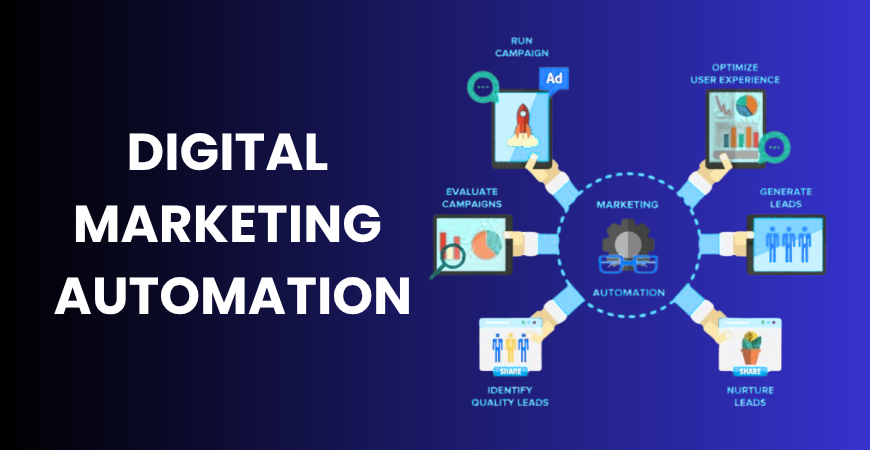
Digital marketing automation refers to the use of software, artificial intelligence, and predefined workflows to automate repetitive marketing activities across various digital channels. Instead of manually sending emails, scheduling social media posts, assigning leads, or tracking customer interactions, businesses can create automated workflows that perform these tasks efficiently and consistently.
Unlike basic scheduling tools, marketing automation platforms respond to customer behavior in real time. For example, a visitor who downloads an eBook can automatically receive a welcome email, educational content, and product recommendations over the following days without any manual intervention.
Automation also helps businesses maintain consistency across multiple touchpoints. Whether customers interact through email, social media, websites, or paid advertisements, businesses can deliver timely and relevant communication throughout the customer journey.
Many organizations integrate automation into their broader digital marketing strategy because it improves operational efficiency while creating better experiences for potential and existing customers.
Why Businesses Are Adopting Digital Marketing Automation
Businesses today operate in an increasingly competitive digital environment where customers expect quick responses, personalized communication, and consistent engagement across multiple platforms. Managing these expectations manually becomes difficult as businesses grow.
Digital marketing automation solves this challenge by reducing repetitive work while improving the quality and consistency of customer interactions. Marketing teams can automate routine activities and spend more time on planning campaigns, analyzing performance, and developing creative strategies.
Another major reason for adopting automation is scalability. A business may successfully manage a few hundred customers manually, but handling thousands of leads across email, social media, paid advertising, and websites requires automated systems that operate efficiently without sacrificing personalization.
How Digital Marketing Automation Helps Businesses Grow
Save Time by Automating Repetitive Tasks
One of the biggest advantages of digital marketing automation is eliminating repetitive manual work. Marketing professionals often spend hours scheduling social media posts, sending follow-up emails, updating customer records, creating reports, and monitoring campaigns.
Automation platforms perform these tasks automatically according to predefined rules, allowing teams to focus on high-value activities such as campaign planning, customer engagement, and business development.
Businesses following a structured performance marketing guide often rely on automation to improve campaign efficiency while reducing operational costs.
Improve Lead Generation and Nurturing
Generating leads is only the first step toward business growth. Converting those leads into customers requires timely communication and personalized follow-ups.
Automation platforms capture leads from websites, landing pages, and advertisements before automatically assigning them to relevant sales or marketing workflows. Prospective customers can receive welcome emails, educational resources, product recommendations, or consultation invitations based on their interests and actions.
Lead scoring is another valuable automation feature. By analyzing user behavior, businesses can identify highly engaged prospects and prioritize them for sales conversations, improving conversion rates while reducing wasted effort.
Deliver Personalized Customer Experiences
Today’s customers expect brands to understand their preferences rather than sending the same message to everyone.
Digital marketing automation allows businesses to segment audiences based on demographics, purchase history, browsing behavior, engagement levels, and customer interests. This enables highly personalized communication across email, websites, advertisements, and social media.
For example, an online retailer can automatically recommend products based on previous purchases, while a service provider can send customized content depending on where a prospect is in the buying journey.
Businesses combining automation with Artificial Intelligence in marketing can further improve personalization by predicting customer behavior and recommending the most relevant content at the right time.
Increase Marketing Efficiency
Marketing teams frequently manage multiple campaigns across different platforms simultaneously. Without automation, coordinating these activities requires significant manual effort and increases the risk of errors.
Automation improves efficiency by connecting different marketing activities into a single workflow. For instance, a customer who submits a contact form can automatically receive an email, be added to a CRM, enter a lead nurturing sequence, and trigger notifications for the sales team—all within seconds.
This streamlined approach reduces delays, improves collaboration, and ensures that every customer receives a consistent experience regardless of how they interact with the business.
Improve Customer Retention
Business growth depends not only on acquiring new customers but also on retaining existing ones. Automated communication helps businesses maintain long-term relationships through consistent engagement.
Companies can automatically send onboarding emails, educational resources, renewal reminders, loyalty rewards, birthday offers, and customer satisfaction surveys without manual intervention.
Businesses that combine automation with the benefits of email marketing can build stronger customer relationships by delivering timely, relevant, and personalized messages that encourage repeat business.
Make Better Data-Driven Decisions
One of the most valuable aspects of digital marketing automation is the ability to collect and analyze customer data continuously.
Automation platforms track customer interactions, campaign performance, website activity, email engagement, and conversion paths in real time. These insights help businesses understand which marketing activities generate the best results.
Combining automation with conversion tracking allows marketers to identify high-performing campaigns, optimize customer journeys, and allocate budgets more effectively based on measurable outcomes rather than assumptions.
Increase ROI
Every marketing investment should contribute to business growth. Automation helps maximize return on investment by improving efficiency, reducing manual effort, and optimizing customer interactions throughout the sales funnel.
Businesses can automatically identify underperforming campaigns, adjust communication workflows, and improve audience targeting based on performance data. Automation also minimizes repetitive administrative work, allowing teams to achieve more without significantly increasing operational costs.
When integrated with tracking technologies such as Facebook pixel code, businesses gain deeper insights into customer behavior, enabling smarter remarketing strategies and more effective advertising campaigns.
Key Areas Where Digital Marketing Automation Is Used
Digital marketing automation is not limited to one marketing channel. Businesses use it across multiple touchpoints to improve efficiency, maintain consistency, and create better customer experiences.
Email Marketing
Email remains one of the most effective marketing channels, and automation makes it even more powerful. Businesses can automatically send welcome emails, abandoned cart reminders, product recommendations, newsletters, and follow-up sequences based on customer behavior.
Rather than sending the same message to every subscriber, automation delivers personalized content that increases engagement and conversions. Businesses implementing the benefits of email marketing alongside automation often see improved open rates and stronger customer relationships.
Social Media Marketing
Maintaining an active social media presence requires consistent posting and audience engagement. Automation platforms help businesses schedule content in advance, publish posts at optimal times, and monitor engagement across multiple platforms.
Although automation handles repetitive publishing tasks, businesses should continue interacting with their audience personally to build genuine relationships. Combining automation with a strong social media marketing strategy ensures consistency while allowing teams to focus on creating valuable content.
CRM and Lead Management
Automation platforms integrate with customer relationship management (CRM) systems to organize leads, update customer records, assign prospects to sales representatives, and trigger follow-up workflows automatically.
This eliminates manual data entry while ensuring that every lead receives timely communication throughout the buying journey.
Content Marketing
Creating and distributing content becomes more efficient with automation. Businesses can schedule blog promotions, repurpose existing content for different platforms, and automate email notifications whenever new content is published.
AI-powered automation also helps marketers identify content opportunities based on customer interests and engagement patterns.
Paid Advertising
Advertising platforms now include automation features such as automated bidding, audience optimization, and budget management. These capabilities help businesses improve campaign performance while reducing manual adjustments.
Businesses using automation alongside a structured performance marketing guide can continuously optimize campaigns based on real-time performance data.
Customer Support
Automation also improves customer service through chatbots, automated responses, ticket routing, and self-service knowledge bases. While complex issues still require human assistance, automation helps businesses provide faster responses to common customer questions.

Popular Digital Marketing Automation Tools
Choosing the right platform depends on business size, goals, and marketing requirements. Some of the most widely used automation solutions include:
| Tool | Best For |
| HubSpot | CRM, lead nurturing, and marketing automation |
| ActiveCampaign | Email automation and customer journeys |
| Mailchimp | Email marketing automation |
| Brevo | Email campaigns and CRM automation |
| Zapier | Connecting applications and workflow automation |
| Make | Advanced workflow automation |
| HubSpot AI | AI-powered marketing automation |
| Salesforce Marketing Cloud | Enterprise automation |
Businesses looking to expand their automation capabilities can also explore dedicated AI marketing tools that combine artificial intelligence with workflow automation, customer insights, and predictive analytics.
How to Get Started with Digital Marketing Automation
Successfully implementing automation requires planning rather than simply purchasing software. Businesses should begin by identifying repetitive marketing activities that consume significant time and resources.
Identify Repetitive Tasks
Start by listing marketing activities performed regularly, such as email follow-ups, lead assignments, social media scheduling, campaign reporting, or customer onboarding. These are ideal candidates for automation.
Choose the Right Platform
Select an automation platform based on your business goals, team size, budget, and existing technology stack. Avoid choosing software with unnecessary features that your business may never use.
Build Simple Workflows First
Instead of automating everything at once, begin with a few high-impact workflows such as welcome emails, lead nurturing sequences, or appointment reminders. Once these workflows perform well, gradually expand automation across other marketing activities.
Monitor Performance
Automation should never operate without regular monitoring. Review campaign performance, customer engagement, conversion rates, and workflow effectiveness to identify opportunities for improvement.
Businesses that combine automation with Facebook Pixel Code and accurate analytics gain better visibility into customer journeys and campaign performance, allowing continuous optimization.
Many businesses understand the benefits of automation but struggle to implement it effectively. Working with an experienced digital marketing agency like Digiad Solutions can help businesses select the right automation platforms, design efficient workflows, and integrate automation into their overall marketing strategy for long-term growth.
Conclusion
Digital marketing automation enables businesses to save time, improve efficiency, personalize customer experiences, and make smarter marketing decisions at scale. By automating repetitive tasks while maintaining meaningful customer engagement, businesses can increase productivity, strengthen relationships, and drive sustainable growth. With the right strategy, tools, and continuous optimization, automation becomes a valuable investment that supports long-term business success.
Frequently Asked Questions
1. What is digital marketing automation?
Digital marketing automation is the use of software and technology to automate repetitive marketing tasks such as email campaigns, lead nurturing, customer segmentation, social media scheduling, and performance reporting.
2. How does digital marketing automation help businesses grow?
It helps businesses save time, improve efficiency, personalize customer communication, generate better leads, optimize campaigns, and increase return on investment.
3. Is it suitable for small businesses?
Yes. Many automation platforms offer affordable plans that allow small businesses to streamline routine marketing activities without requiring large teams or budgets.
4. Which marketing activities can be automated?
Businesses can automate email marketing, lead management, customer segmentation, social media publishing, CRM updates, reporting, advertising optimization, and customer follow-ups.
5. Do businesses need AI for marketing automation?
Not necessarily. However, combining automation with AI can significantly improve personalization, predictive analytics, customer insights, and campaign optimization, making marketing efforts more efficient and effective.