Introduction
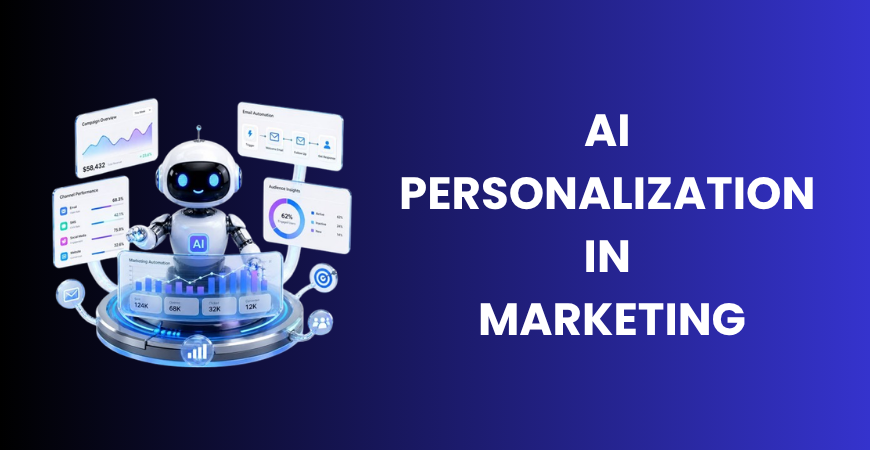
Modern customers expect brands to understand their preferences and deliver experiences that feel relevant. This is where AI personalization in marketing is making a significant impact. By analyzing customer behavior and using data intelligently, businesses can create personalized experiences that improve engagement, build trust, and increase conversions.
From personalized emails and product recommendations to customized website experiences, AI is helping businesses move beyond one-size-fits-all marketing. In this guide, you’ll learn how AI personalization works, its benefits, practical examples, and tips for using it effectively.
What Is AI Personalization in Marketing?
AI personalization in marketing uses artificial intelligence to deliver tailored experiences based on customer data, preferences, and behavior. Instead of showing the same content to every user, AI analyzes browsing history, purchase behavior, and engagement patterns to provide more relevant recommendations.
Unlike traditional personalization, AI continuously learns from customer interactions and improves its recommendations over time. As businesses adopt Artificial Intelligence in Marketing, AI personalization helps deliver better customer experiences and improve marketing performance.
How AI Personalization Works
AI personalization combines customer data with machine learning algorithms to understand user behavior and predict what customers are most likely to need or engage with.
1. Data Collection
The first step is gathering customer data from different touchpoints, including:
- Website browsing activity
- Purchase history
- Email interactions
- Search behavior
- Social media engagement
- Mobile app usage
The more relevant data available, the more accurately AI can personalize customer experiences.
2. Customer Analysis
Once data is collected, AI identifies patterns and groups customers with similar interests or behaviors. It can predict which products users are likely to purchase, what content they may find useful, and when they are most likely to engage.
Many businesses combine these insights with Marketing Automation tools to automatically deliver personalized campaigns at the right time.
3. Personalized Delivery
Based on its analysis, AI delivers customized experiences across various channels, such as:
- Personalized product recommendations
- Dynamic website content
- Targeted email campaigns
- Customized advertisements
- Individualized offers and promotions
The system continuously learns from customer interactions, allowing recommendations to become more accurate over time.

Benefits of AI Personalization in Marketing
Better Customer Experience
Customers appreciate brands that understand their needs. AI personalization helps businesses provide relevant recommendations, useful content, and timely communication, making interactions more convenient and engaging.
Instead of searching through large amounts of information, customers receive suggestions that match their interests, creating a smoother buying journey.
Higher Engagement Rates
Generic marketing messages often receive limited attention. Personalized content, however, is more likely to capture interest because it directly addresses customer preferences.
For example, businesses using personalized email campaigns often see higher open rates and click-through rates. Combining AI-driven personalization with the benefits of email marketing can significantly improve customer engagement.
Improved Conversion Rates
Showing customers products or services that match their interests increases the likelihood of conversion. AI helps businesses recommend relevant products, display targeted offers, and present personalized calls to action based on customer behavior.
This reduces decision-making time and encourages customers to complete purchases more confidently.
Increased Customer Loyalty
Personalized experiences make customers feel valued rather than treated as just another visitor. When businesses consistently deliver relevant recommendations and helpful interactions, customers are more likely to return and remain loyal over time.
AI-powered personalization also supports stronger relationships by remembering customer preferences across multiple interactions.
More Efficient Marketing Campaigns
AI eliminates much of the manual work involved in audience segmentation and campaign optimization. Instead of creating multiple campaigns for different customer groups manually, AI can automatically deliver the right message to the right audience.
Businesses exploring various AI Marketing tools often prioritize personalization features because they improve campaign performance while saving time and marketing resources.
Real-World Examples of AI Personalization
E-commerce
Online retailers use AI to recommend products based on browsing history, previous purchases, and customer preferences. These personalized recommendations increase the chances of repeat purchases while improving the shopping experience.
Email Marketing
AI helps businesses send personalized emails by recommending products, customizing subject lines, and delivering messages at the time customers are most likely to engage. Personalized email campaigns often perform better than generic campaigns because they are more relevant to individual users.
Streaming Platforms
Streaming services use AI to recommend movies, TV shows, or music based on viewing and listening history. This keeps users engaged by continuously suggesting content that matches their interests.
Digital Advertising
Advertising platforms use AI to display personalized ads based on customer behavior, demographics, interests, and previous interactions. This improves ad relevance and helps businesses achieve better campaign performance.
Customer Support
Modern AI Chatbots for business use personalization to provide faster and more relevant responses. By remembering previous interactions and customer preferences, chatbots can recommend suitable products, answer questions more accurately, and improve the overall support experience.
Tips for Using AI Personalization Effectively
Start with Quality Customer Data
AI is only as effective as the data it receives. Collect accurate, relevant, and permission-based customer information to improve personalization and avoid inaccurate recommendations.
Respect Customer Privacy
Be transparent about how customer data is collected and used. Following privacy regulations and giving users control over their data helps build trust while maintaining compliance.
Avoid Over-Personalization
Personalization should improve customer experiences without feeling intrusive. Focus on delivering relevant recommendations rather than using excessive personal information that may make users uncomfortable.
Test and Optimize Regularly
Customer behavior changes over time, so personalization strategies should be reviewed regularly. Monitor engagement, conversions, and customer feedback to refine AI recommendations and improve campaign performance.
Combine AI with Human Creativity
AI can automate analysis and recommendations, but human creativity is still essential for developing engaging campaigns and meaningful brand messaging. The best results come from combining technology with strategic thinking.
Common Challenges
Although AI personalization offers many advantages, businesses should also be aware of its limitations.
- Poor-quality customer data can reduce recommendation accuracy.
- Privacy regulations require responsible data collection and usage.
- Over-personalization may create uncomfortable customer experiences.
- Integrating AI with existing business systems can require time and planning.
- AI models need continuous monitoring and improvement to remain effective.
Addressing these challenges early helps businesses maximize the benefits of AI personalization while maintaining customer trust.
Popular AI Personalization Tools
| Tool | Best For |
| Dynamic Yield | Website personalization |
| Adobe Target | Customer experience optimization |
| Salesforce Einstein | Customer insights and recommendations |
| HubSpot | Personalized marketing campaigns |
| Optimizely | Testing and personalization |
How Businesses Can Implement AI Personalization
Start by identifying where personalization can create the most value, whether it’s improving customer engagement, increasing conversions, or enhancing customer support. Then, choose AI tools that integrate with your existing marketing systems and regularly optimize campaigns based on customer behavior.
Businesses looking to implement AI personalization effectively can benefit from expert guidance. Digiad Solution helps businesses build AI-driven marketing strategies that improve customer engagement and support long-term growth.
Conclusion
AI personalization in marketing helps businesses deliver relevant content and recommendations that improve customer experiences. With the right data and strategy, it increases engagement, strengthens customer relationships, and drives better marketing results.
Frequently Asked Questions
1. What is AI personalization in marketing?
AI personalization in marketing uses artificial intelligence to analyze customer data and deliver personalized content, recommendations, emails, advertisements, and experiences based on individual preferences and behavior.
2. How does AI personalization improve marketing?
It improves customer engagement, increases conversion rates, enhances customer experiences, and helps businesses deliver more relevant marketing messages through data-driven insights.
3. Can small businesses use AI personalization?
Yes. Many marketing platforms offer affordable AI personalization features that enable small businesses to create targeted campaigns without requiring large marketing teams.
4. Which industries benefit most from AI personalization?
E-commerce, retail, healthcare, finance, travel, education, and SaaS businesses commonly use AI personalization to improve customer experiences and marketing performance.
5. Is AI personalization different from traditional personalization?
Yes. Traditional personalization relies on predefined rules, while AI personalization continuously learns from customer behavior and automatically adapts recommendations to deliver more relevant experiences.