
Introduction
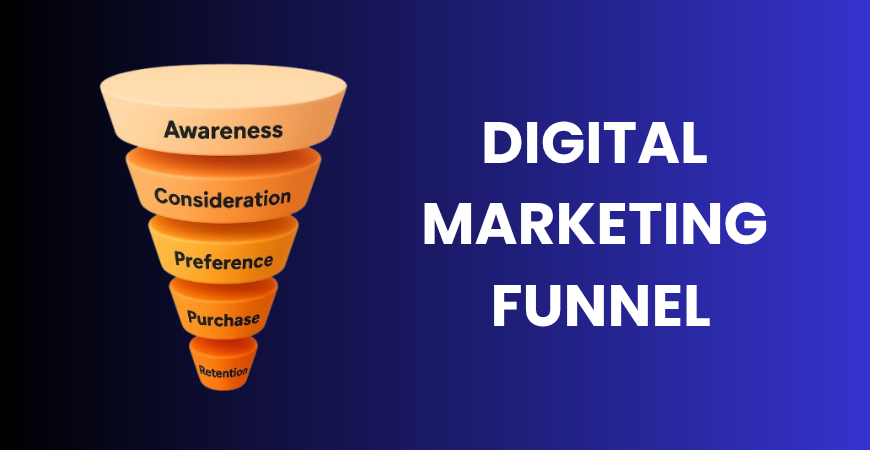
Every customer doesn’t buy the first time they visit your website. Some discover your brand through a Google search, others through social media or ads, and many spend time comparing options before making a decision. That’s why every business needs a digital marketing funnel—a structured process that guides potential customers from awareness to purchase.
A well-planned funnel helps businesses deliver the right message at the right time, improving conversions while creating a better customer experience. In this guide, we’ll explain how a marketing funnel works, why it’s important, and the five stages every business should understand.
What Is a Digital Marketing Funnel?
A digital marketing funnel is a customer journey model that shows how people move from discovering a business to becoming loyal customers. Instead of treating every visitor the same, businesses use different marketing activities at each stage to build trust and encourage action.
A successful digital marketing strategy aligns marketing efforts with each stage of the funnel. Someone who has never heard of your business needs educational content, while someone ready to buy needs convincing offers, testimonials, or product demonstrations.
In Simple Terms
A digital marketing funnel is a step-by-step process that helps businesses attract visitors, convert them into customers, and retain them through targeted marketing at every stage of the buying journey.
Why the Digital Marketing Funnel Matters
Without a structured funnel, businesses often focus only on attracting traffic and overlook what happens afterward. A marketing funnel ensures prospects receive relevant information as they move closer to making a purchase.
An effective funnel helps businesses:
- Generate higher-quality leads
- Improve customer experience
- Increase conversion rates
- Reduce wasted marketing spend
- Build long-term customer relationships
Studies show that businesses using structured lead nurturing generate significantly more sales-ready leads than those relying on one-time marketing campaigns. When combined with a growth marketing strategy, a marketing funnel creates a predictable system for sustainable business growth.
The Five Stages of the Digital Marketing Funnel
1. Awareness (Top of the Funnel)
What Happens at This Stage?
The awareness stage is where potential customers first discover your business. They may not be actively looking for your product yet, but they have a problem or need information. Your objective is to make your brand visible and leave a positive first impression.
At this stage, customers are searching for answers rather than products. Educational and informative content performs much better than direct sales messages.
Marketing Channels That Work
- Search Engine Optimization (SEO)
- Blog articles
- Social media content
- Video marketing
- Google Ads
- Display advertising
Businesses that follow best SEO practices improve their chances of appearing in search results when potential customers begin researching online. Similarly, pay per click advertising can generate immediate visibility by placing your business in front of high-intent audiences.
Goal
The primary goal of the awareness stage is to attract relevant visitors and introduce them to your brand.
2. Interest
What Happens at This Stage?
Once people know your business exists, they begin exploring whether your products or services can solve their problems. They read blog posts, browse your website, follow your social media pages, and compare different sources of information.
This is the stage where trust begins to develop. Instead of pushing for a sale, businesses should focus on educating prospects and answering their questions.
Marketing Activities
- Educational blog content
- Downloadable guides
- Email newsletters
- Webinars
- Videos
- FAQs
An effective social media strategy helps businesses stay connected with potential customers by regularly sharing useful content and encouraging engagement. Every interaction builds familiarity and increases the likelihood of moving prospects further down the funnel.
Goal
The goal of the interest stage is to educate potential customers and build enough trust for them to continue exploring your business.
3. Consideration
What Happens at This Stage?
At the consideration stage, prospects have narrowed their options and are actively evaluating different businesses. They compare pricing, features, customer reviews, testimonials, and case studies before making a decision.
This is where your business must clearly demonstrate its value and explain why it offers the best solution.
Marketing Activities
- Case studies
- Customer testimonials
- Product demonstrations
- Comparison pages
- Free consultations
- Lead magnets
Rather than presenting isolated services, businesses should show how their digital marketing solutions work together to solve customer challenges. Personalized follow-ups through email marketing can also help answer objections and keep prospects engaged during the decision-making process.
Goal
The objective of the consideration stage is to strengthen buyer confidence and position your business as the preferred choice.
4. Conversion
What Happens at This Stage?
The conversion stage is where prospects become customers. By this point, they understand their problem, have compared different options, and are ready to take action. Your goal is to make the buying process as simple and convincing as possible.
A confusing website, lengthy forms, or unclear calls-to-action can cause potential customers to leave without converting. Small improvements in user experience often lead to better conversion rates.
Marketing Activities
- Optimized landing pages
- Strong calls-to-action (CTAs)
- Limited-time offers
- Free trials or demos
- Simple checkout process
Goal
The goal of the conversion stage is to turn qualified leads into paying customers while removing any barriers that could prevent them from completing the desired action.
5. Retention & Advocacy
What Happens at This Stage?
The customer experience does not end with the purchase. Retaining existing customers is often more cost-effective than gaining new ones. Satisfied customers are also more likely to make repeat purchases and recommend your business to others.
Maintaining regular communication and providing excellent customer support helps strengthen long-term relationships.
Marketing Activities
- Customer support
- Loyalty programs
- Follow-up emails
- Referral programs
- Customer feedback surveys
Consistent email marketing helps businesses stay connected with customers through newsletters, product updates, and exclusive offers, encouraging repeat business and long-term loyalty.
Goal
The objective is to retain customers, encourage repeat purchases, and turn satisfied customers into brand advocates.
Digital Marketing Funnel vs Sales Funnel
| Digital Marketing Funnel | Sales Funnel |
| Focuses on attracting and nurturing prospects | Focuses on closing qualified leads |
| Starts when customers first discover a brand | Begins after leads enter the sales process |
| Driven mainly by marketing activities | Driven mainly by sales activities |
| Builds awareness, trust, and engagement | Converts prospects into paying customers |
Both funnels work together. Marketing generates and nurtures leads, while sales converts qualified prospects into customers.
Common Funnel Mistakes Businesses Make
Many businesses fail to achieve consistent results because they overlook important stages of the funnel. Some of the most common mistakes include:
- Focusing only on generating traffic.
- Creating the same message for every audience.
- Ignoring lead nurturing after the first interaction.
- Weak or unclear calls-to-action.
- Not measuring campaign performance through conversion tracking.
- Failing to improve the funnel based on customer behavior.
Avoiding these mistakes helps businesses improve both customer experience and conversion rates.
How to Build an Effective Digital Marketing Funnel
Creating an effective funnel doesn’t have to be complicated. Follow these steps:
1. Understand Your Audience
Identify your ideal customers, their challenges, and what motivates their purchasing decisions.
2. Create Content for Every Stage
Publish educational content for awareness, comparison content for consideration, and persuasive offers for conversion.
3. Choose the Right Marketing Channels
Use SEO, social media, paid advertising, email, and content marketing where they fit best instead of relying on a single platform.
4. Capture Leads
Use landing pages, downloadable resources, newsletters, or contact forms to collect leads.
5. Nurture Prospects
Build trust through personalized communication and valuable content rather than immediate sales messages.
6. Optimize Conversions
Continuously improve landing pages, forms, CTAs, and website experience using customer insights.
7. Measure and Improve
Monitor performance regularly and refine your funnel based on real data. Businesses that combine these steps with effective digital marketing solutions create stronger customer journeys and achieve more consistent results.
How Digiad Solution Helps Businesses Build High-Converting Funnels
At Digiad Solution, we help businesses create digital marketing funnels that guide customers from awareness to loyalty. Instead of focusing on individual campaigns, we build connected marketing systems that support long-term growth.
Our services include SEO, content marketing, paid advertising, social media management, email campaigns, landing page optimization, and analytics. By combining these services with data-driven optimization, we help businesses attract qualified leads, improve conversions, and maximize marketing performance.
Frequently Asked Questions
What is a digital marketing funnel?
A digital marketing funnel is a framework that guides potential customers from discovering a business to becoming loyal customers through different stages of the buying journey.
What are the five stages of a marketing funnel?
The five stages are Awareness, Interest, Consideration, Conversion, and Retention & Advocacy.
Why is a digital marketing funnel important?
It helps businesses attract qualified leads, improve customer experience, increase conversions, and build long-term customer relationships.
What is the difference between a marketing funnel and a sales funnel?
A marketing funnel focuses on attracting and nurturing prospects, while a sales funnel focuses on converting qualified leads into customers.
How can businesses improve their digital marketing funnel?
Businesses should understand their audience, create content for every funnel stage, optimize user experience, monitor conversion tracking, and continuously improve campaigns using data.
Conclusion
A digital marketing funnel helps businesses understand how customers move from discovering a brand to becoming loyal advocates. By creating the right content, choosing suitable marketing channels, and optimizing every stage of the journey, businesses can improve lead generation, increase conversions, and build lasting customer relationships. Whether you’re refining your digital marketing strategy or implementing a long-term growth marketing strategy, a well-designed funnel provides the foundation for sustainable business success.


