Introduction
Ever wondered why some Google Ads perform better than others, even when businesses target similar keywords? Google Ads quality score can provide useful clues. It helps advertisers understand how relevant their keywords, ads, and landing pages are to users.
A strong score isn’t the goal by itself. What matters is creating a relevant experience from the user’s search to the advertisement and landing page. Understanding this metric can help businesses identify campaign weaknesses and improve advertising performance.
What Is Google Ads Quality Score?
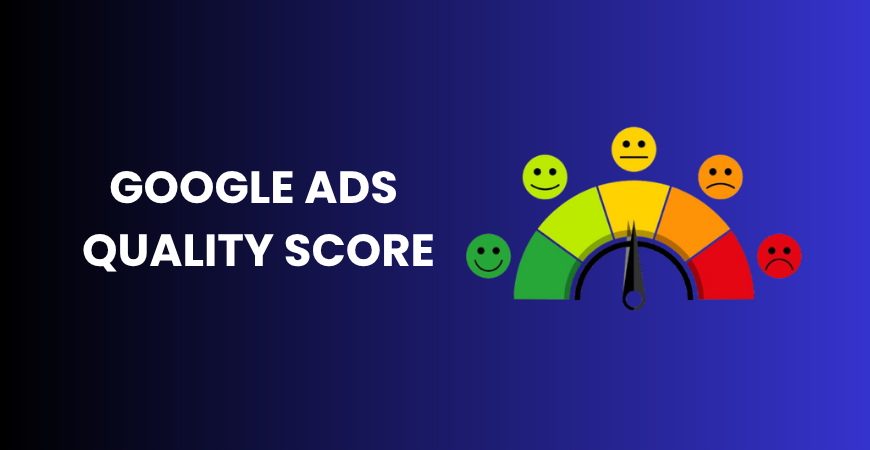
Google Ads quality score is a diagnostic metric that rates the quality and relevance of keywords in Search campaigns on a scale from 1 to 10. It helps advertisers understand how well their keywords, ads, and landing pages align with what users are searching for.
The score is based mainly on three areas:
- Expected click-through rate (CTR)
- Ad relevance
- Landing page experience
For businesses running a Google Ads search campaign, the score can highlight areas that may need improvement. For example, a low score could indicate that an advertisement is not closely related to the keyword or that the landing page does not provide a relevant user experience.
Quality Score is different from Ad Rank. Quality Score is a diagnostic tool, while Ad Rank is used during the ad auction to determine whether an ad can appear and where it may be positioned. Therefore, advertisers shouldn’t treat a high Quality Score as a guarantee of better rankings or lower costs.
How Is Google Ads Quality Score Calculated?
Expected Click-Through Rate
Expected CTR estimates how likely users are to click an ad when it appears for a particular keyword. Relevant messaging and a strong match between the keyword and advertisement can help improve expected CTR.
However, attracting clicks should not be the only goal. The traffic should also be relevant enough to contribute to leads, sales, or other valuable actions.
Ad Relevance
Ad relevance measures how closely an advertisement matches the user’s search intent. An ad for “SEO services” should clearly address SEO services rather than provide a generic message about digital marketing.
Tightly themed ad groups make this easier because advertisers can create specific advertisements for closely related keywords.
Landing Page Experience
The landing page should deliver what the advertisement promises. If an ad promotes a particular service, visitors should be taken to a page that clearly explains that service rather than a generic page requiring additional searching.
A good landing page should be relevant, easy to navigate, mobile-friendly, and useful to visitors.
Why Does Google Ads Quality Score Matter?
Google Ads quality score is useful because it helps advertisers identify weaknesses in campaign relevance. Instead of looking only at clicks and impressions, businesses can use the score to evaluate the connection between their keywords, ads, and landing pages.
A higher score can indicate strong relevance, but it doesn’t automatically mean a campaign is profitable. Businesses should also monitor CTR, conversion rate, cost per conversion, conversion value, and return on ad spend.
Quality Score also works alongside other optimization decisions, including Google Ads bidding strategies. The right bidding approach should be selected according to campaign objectives and available performance data rather than focusing only on improving the score.
In short, Quality Score is a diagnostic indicator, not the final measure of campaign success.
How to Improve Google Ads Quality Score
Improving Quality Score requires consistent attention to keywords, ad relevance, and landing pages. Effective Google Ads management can help businesses monitor these areas, identify weaknesses, and make targeted improvements over time.
1. Improve Keyword-to-Ad Relevance
Make sure your ad directly matches the keywords and search intent you’re targeting. Avoid placing unrelated keywords in the same ad group.
For example, keywords related to SEO services and social media marketing services should generally have separate ad groups and relevant advertisements.
2. Improve Expected CTR
Give users a clear reason to click your ad. Write specific headlines, highlight relevant benefits, and include clear calls to action.
Testing different ad variations can also help identify which messages generate stronger engagement. However, avoid misleading claims simply to increase clicks.
3. Improve Landing Page Experience
Make sure your landing page matches the advertisement. Visitors should immediately find the information they expected after clicking.
Improve mobile usability, page speed, navigation, and content relevance. A clear call to action can also make it easier for visitors to take the next step.
4. Create Tightly Themed Ad Groups
Group closely related keywords together rather than placing many unrelated terms in one ad group. This makes it easier to create relevant advertisements and landing pages.
For example, “digital marketing course,” “digital marketing training,” and “digital marketing classes” can form one closely related group.
5. Review Low-Scoring Keywords
Don’t immediately pause every keyword with a low score. First, identify what is causing the problem.
Check whether the issue is expected CTR, ad relevance, or landing page experience. Then make targeted changes based on the specific weakness.
6. Use Negative Keywords
Negative keywords prevent ads from appearing for irrelevant searches. For example, a business selling premium software might exclude searches containing “free” if those users are unlikely to become customers.
Reviewing search terms regularly and adding relevant negative keywords can reduce wasted clicks and improve traffic quality.
How Digiad Solution Helps Improve Google Ads Performance
Improving campaign performance requires more than checking Quality Score. Businesses also need to review keywords, advertisements, search terms, landing pages, and conversion data.
Digiad Solution can help businesses with keyword analysis, ad-group restructuring, ad relevance, negative keyword management, landing-page recommendations, and ongoing campaign optimization.
Accurate conversion tracking is particularly important because businesses need to know whether campaign improvements are generating actual leads, sales, bookings, or other valuable actions.
For businesses requiring ongoing support, PPC management services can provide assistance with campaign structure, keyword targeting, budget management, optimization, and performance reporting. The focus should remain on measurable business outcomes rather than simply achieving a higher Quality Score.
Frequently Asked Questions
What is a good Quality Score in Google Ads?
A score of 7 or higher is often considered strong, but there is no universal score that guarantees campaign success. Relevance and actual campaign results matter more than achieving a specific number.
Is a Quality Score of 10 necessary?
No. A perfect score isn’t required for a successful campaign. Businesses should prioritize relevant traffic, conversions, cost efficiency, and revenue.
Does Quality Score affect CPC?
Quality Score provides insight into keyword and ad relevance, and strong relevance can support more efficient ad performance. However, actual CPC depends on multiple factors in the ad auction.
How can I improve a low Quality Score?
Check which component is weak: expected CTR, ad relevance, or landing page experience. Then make improvements in that specific area.
Is Quality Score more important than conversions?
No. Quality Score is a diagnostic metric. Conversions, cost per conversion, revenue, and ROI are more important when measuring business results.
Conclusion
Google Ads quality score helps businesses understand how well their keywords, advertisements, and landing pages work together. Improving expected CTR, ad relevance, landing page experience, keyword organization, and traffic quality can strengthen campaign performance. However, businesses should not focus on the score alone. The real goal is to attract relevant users, generate valuable conversions, and make advertising budgets work more efficiently.