Businesses rarely have just one type of customer. Some people compare products before purchasing, others make quick decisions, while some need repeated interactions before trusting a brand. AI customer segmentation helps businesses understand these differences by analysing customer data and identifying groups with similar behaviours, interests, and needs.
Instead of treating everyone alike, businesses can use artificial intelligence to create more relevant marketing messages, recommend suitable products, and reach audiences with a better understanding of their preferences.
What Is AI Customer Segmentation?
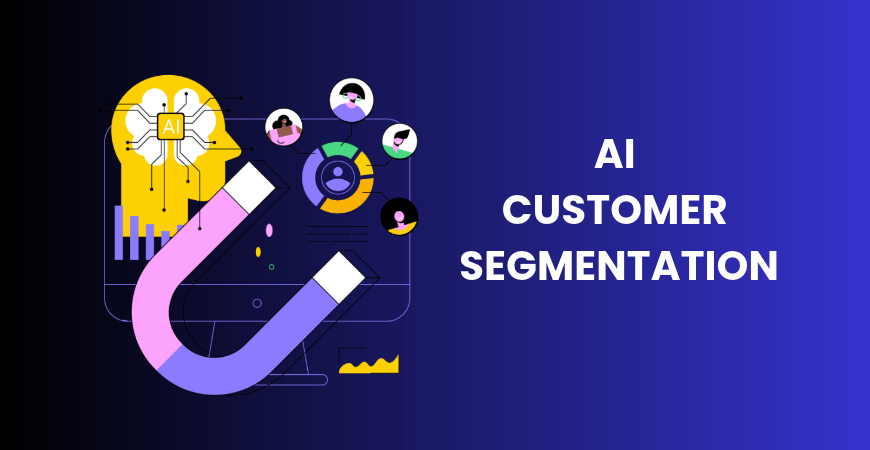
AI customer segmentation is the process of using artificial intelligence and machine learning to divide customers into smaller groups based on shared characteristics, interests, and behaviours.
Traditional segmentation often relies on predefined categories such as age, location, or income. AI-powered segmentation goes further by analysing different types of customer information together to discover patterns that may otherwise go unnoticed.
For example, an online store might analyse browsing history, previous purchases, and shopping frequency to identify customers with similar buying habits.
Businesses can use these insights to understand:
- Which customers may be interested in particular products.
- What different audience groups prefer.
- Which customers regularly engage with campaigns.
- Who may need additional information before purchasing.
- Which existing customers have become inactive.
Unlike traditional methods, AI can identify patterns across large datasets. However, its findings still require human interpretation.
How Does AI Customer Segmentation Work?
AI customer segmentation involves collecting customer information, analysing patterns, and organising customers into useful groups. The process generally includes these steps.
Collect Customer Data
Businesses gather relevant information from sources such as:
- Demographics, including age and location.
- Purchase history and transaction records.
- Website visits and browsing activity.
- Email and social media engagement.
- Customer enquiries and service interactions.
Businesses can use AI marketing tools to analyse information from supported data sources. However, accurate and relevant data is more important than simply collecting large amounts of it.
Analyse Customer Behaviour and Patterns
AI systems examine customer information to identify similarities, differences, and recurring behaviours.
For example, an online retailer might discover that customers who repeatedly view a particular product category also tend to purchase related accessories.
Create Customer Segments
Based on these patterns, AI can group customers into categories such as frequent buyers, first-time customers, discount-focused shoppers, and inactive visitors.
These groups help businesses plan different communication approaches instead of sending identical messages to everyone.
Predict Customer Interests and Intent
Some AI systems use predictive analytics to estimate future customer behaviour. They may identify people showing signs of purchase interest or customers whose activity suggests declining engagement.
These predictions are estimates, not guarantees, and depend on the quality of the available data.
Update Segments with New Data
Customer preferences change over time. AI-powered systems can update segments as new interactions and information become available, depending on their configuration.
This makes segmentation an ongoing process that requires regular monitoring.
How Does AI Help Businesses Target the Right Customers?
Creating customer groups is only the first step. Businesses need to use those insights to make their marketing more relevant.
Identify High-Intent Customers
AI can analyse repeated product views, website interactions, previous purchases, and enquiry activity to identify customers showing stronger buying interest.
For example, someone who repeatedly visits a product’s pricing page may demonstrate more purchase interest than a visitor who views the homepage once. Businesses can use these signals to prioritise relevant follow-ups.
Personalise Marketing Messages
Different customers need different information. A new visitor may need an introduction to a brand, while an existing customer may be more interested in product recommendations or relevant offers.
AI segmentation can support personalised communication and help businesses develop a more focused digital marketing strategy.
Recommend Relevant Products and Services
AI can analyse previous purchases, browsing activity, and preferences to suggest suitable products or services.
For example, an online store may recommend accessories related to a product a customer recently purchased. Relevant suggestions can make product discovery easier and improve the shopping experience.
Improve Advertising Audience Targeting
AI-generated segments can help businesses identify audiences that are more relevant to particular advertising campaigns.
These insights can support social media marketing by helping marketers plan campaigns for different audience groups rather than using the same message for everyone.
Re-engage Inactive Customers
AI can identify customers who have stopped interacting with a business or purchasing its products.
Businesses can use these insights to plan re-engagement campaigns featuring useful updates, relevant recommendations, or suitable offers instead of repeatedly sending generic promotions.
What Are the Different Types of AI Customer Segmentation?
AI can support different segmentation approaches depending on the business objective and available information.
Demographic Segmentation
Groups customers using characteristics such as age, location, income, and education. For example, a training institute may distinguish students, graduates, and working professionals.
Behavioural Segmentation
Groups customers according to browsing activity, purchase history, product preferences, and campaign engagement.
Psychographic Segmentation
Identifies groups based on interests, preferences, lifestyle-related patterns, and attitudes. For example, a travel company may distinguish audiences interested in adventure trips and family holidays.
Value-Based Segmentation
Groups customers according to spending patterns, purchase frequency, and estimated customer lifetime value.
Predictive Segmentation
Uses historical information and analytical models to estimate future behaviour, such as purchase likelihood or potential customer churn.
For example, a business may identify customers whose activity suggests they could stop engaging with its services.
Practical Examples of AI Customer Segmentation
Different industries can apply AI segmentation to understand their audiences and improve marketing decisions.
E-commerce Businesses
An online store can analyse browsing patterns and purchase history to identify frequent buyers, product researchers, and visitors who leave without purchasing. It can then recommend relevant products or plan suitable follow-up campaigns.
Educational Institutions
Educational institutions may analyse course interests, enquiry details, and website interactions to understand prospective learners.
For example, students exploring entry-level courses may need information about foundational skills, while working professionals may be more interested in advanced learning opportunities.
Retail Businesses
Retailers can distinguish frequent shoppers, occasional buyers, and inactive customers using purchase frequency and transaction history. Each group can receive communication relevant to its shopping behaviour.
SaaS Businesses
Software companies can analyse feature usage, subscription activity, and customer interactions to identify active users and customers showing reduced engagement. These insights can help them provide relevant product guidance and support.
Businesses can also use content marketing to address the specific questions and interests of different customer groups.

Challenges and Limitations of AI Customer Segmentation
Although AI can make customer analysis more efficient, businesses should understand its limitations.
- Poor-Quality Data: Incomplete, outdated, or inaccurate information can produce misleading segments.
- Data Privacy: Customer information must be collected and used responsibly, following applicable privacy and consent requirements.
- Incorrect Segmentation: AI may identify patterns that do not have meaningful business value. Similar browsing behaviour does not necessarily mean customers have identical needs.
- Implementation Costs: Some systems require investment in software, data infrastructure, and technical expertise.
- Human Monitoring: Marketers must review AI-generated segments and check whether they remain relevant.
Businesses should also consider competitor analysis as a supporting research activity, while remembering that competitor information cannot replace insights from their own customers.
Starting with a clear objective and a small number of useful customer segments can make implementation more manageable.
Conclusion
AI customer segmentation helps businesses understand customer behaviour, identify meaningful audience groups, and create more relevant marketing campaigns. By analysing customer data and recognising patterns, businesses can improve targeting, personalise communication, and make better-informed marketing decisions. These insights can also support performance marketing by helping businesses focus campaigns on more relevant audiences. However, successful segmentation depends on reliable data, responsible information handling, and regular human evaluation.
Frequently Asked Questions
1. What is AI customer segmentation?
It is the use of artificial intelligence and machine learning to group customers based on shared characteristics, preferences, and behaviours.
2. How does AI help in customer segmentation?
AI analyses customer information, identifies patterns, creates audience groups, and can estimate potential future behaviour.
3. What are the main types of customer segmentation?
Common types include demographic, behavioural, psychographic, geographic, and value-based segmentation. Predictive segmentation is another approach that estimates future customer behaviour.
4. Which AI techniques are used for customer segmentation?
Common techniques include clustering algorithms, machine learning models, classification methods, and predictive analytics.
5. How does AI customer segmentation improve marketing?
It helps businesses identify relevant audiences, personalise communication, recommend suitable products, improve advertising targeting, and plan re-engagement campaigns.
6. Is AI customer segmentation suitable for small businesses?
Yes. Small businesses can begin with existing information such as purchase history, customer enquiries, and website interactions. The right approach depends on their objectives, available data, budget, and technical requirements.