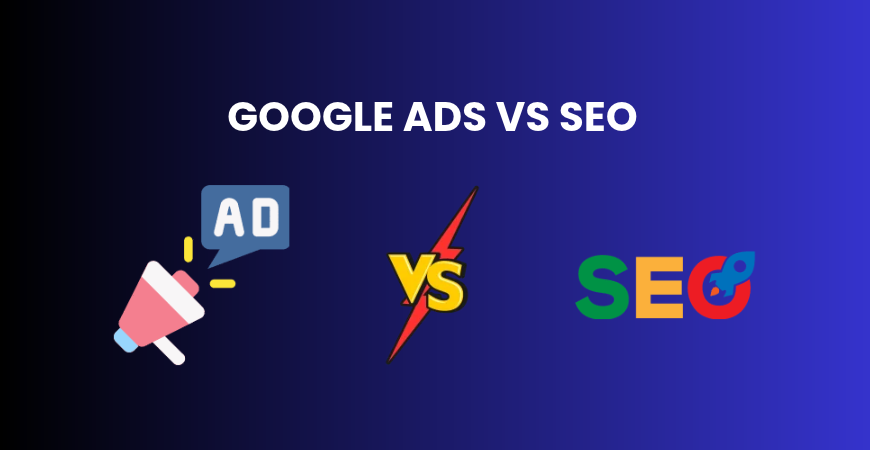
When businesses want to attract customers through Google, two common options come to mind: paid advertising and organic search optimisation. Understanding Google Ads vs SEO can help you decide where to invest your marketing budget, how to reach potential customers, and what kind of results to expect from each approach.
Both channels can increase your website’s visibility, but they work differently. Google Ads can help businesses gain paid visibility quickly, while SEO focuses on building organic search presence over time. The right choice depends on your business goals, budget, competition, and marketing timeline.
What Is Google Ads and How Does It Work?
Google Ads is Google’s online advertising platform that allows businesses to display paid advertisements across Google Search, YouTube, and other eligible advertising placements.
With search advertising, businesses can target relevant keywords that potential customers use when looking for products or services. Advertisers participate in an auction where factors such as bids, ad quality, and expected performance influence ad placement.
For example, a digital marketing agency may target searches such as “SEO services for small businesses” or “Google Ads agency near me” to reach people actively looking for marketing support.
Businesses can create different types of Google Ads campaigns depending on their objectives, including Search, Display, Video, and Shopping campaigns. Each format offers different ways to reach potential customers.
What Is SEO and How Does It Work?
Search Engine Optimisation (SEO) is the process of improving a website’s visibility in organic search results. Instead of paying for individual advertising clicks, businesses optimise their websites and content to make them more relevant and useful for searchers.
SEO generally involves three important areas:
- On-page SEO: Improving website content, headings, keywords, internal links, and page structure.
- Technical SEO: Helping search engines crawl and index the website while improving loading speed and mobile usability.
- Off-page SEO: Building website authority through relevant backlinks, brand mentions, and other external signals.
For example, an accounting firm may publish helpful articles about tax filing, business accounting, and financial planning to attract people searching for these topics.
Following best SEO practices helps businesses create useful content, improve website usability, and strengthen organic search visibility. SEO rankings depend on several factors, including content relevance, competition, website quality, and search engine algorithms.
Google Ads vs SEO: Key Differences Compared
Although both approaches help businesses attract visitors through Google, their methods, costs, and timelines differ.
| Comparison factor | Google Ads | SEO |
| Traffic source | Paid search and advertising placements | Organic search results |
| Speed | Can generate visibility soon after campaign launch | Usually takes longer to build visibility |
| Cost | Requires an advertising budget | Requires investment in content, optimisation, and expertise |
| Traffic duration | Generally depends on active campaigns and budget | Can continue generating traffic but requires maintenance |
| Targeting | Offers keyword, location, and audience targeting | Focuses on search intent, relevance, and content quality |
| Competition | Involves bidding and ad quality | Depends on content relevance, website authority, and competition |
| Long-term value | Requires ongoing advertising expenditure | Can build sustainable organic traffic over time |
With Google Ads, advertisements generally stop receiving paid visibility when campaigns are paused or budgets are exhausted. Well-performing SEO pages, however, may continue attracting organic visitors, although rankings and traffic can change.
Google Ads also uses factors such as ad relevance and landing page experience to assess advertising quality. Quality Score is a diagnostic measure that helps advertisers understand how their keywords, ads, and landing pages compare with other advertisers. It does not determine organic SEO rankings.
Google Ads vs SEO: Which Is Better for Your Business Goals?
There is no universal winner when comparing these two channels. The better option depends on what your business wants to achieve and how quickly you want to achieve it.
When Google Ads Is Better
Google Ads can be suitable when your business needs faster visibility and wants to reach people actively searching for specific products or services.
Consider using it when:
- Launching a new business or product: Paid campaigns can introduce your offerings to potential customers without waiting for organic rankings.
- Promoting seasonal offers: Businesses can advertise limited-time discounts, events, and special promotions.
- Generating enquiries: Service providers can target relevant searches to connect with people looking for their services.
- Testing new markets: Advertisers can experiment with keywords, locations, and messages to understand audience responses.
- Reaching customers with immediate intent: Search advertisements can help businesses appear when potential customers are actively looking for solutions.
However, faster visibility does not automatically mean profitable results. Performance still depends on targeting, competition, landing page quality, and conversion optimisation.
When SEO Is Better
SEO is generally more suitable for businesses that want to establish a stronger organic presence and attract relevant visitors over the long term.
Consider investing in SEO when:
- Building long-term visibility: Well-optimised content can attract organic visitors over an extended period.
- Targeting informational searches: Blogs and resource pages can answer customer questions and introduce your business to potential buyers.
- Developing brand authority: Consistent, helpful content can establish your website as a useful industry resource.
- Reducing dependence on paid traffic: Organic visibility can diversify your website’s traffic sources.
- Reaching local customers: Location-focused optimisation can help businesses appear in relevant local searches.
Your overall digital marketing strategy should consider business objectives, available resources, competition, and the customer journey before deciding which channel deserves priority.
Google Ads vs SEO: Which Is More Cost-Effective?
Cost is an important factor when deciding between paid advertising and organic search optimisation. However, comparing them only by their initial expenses can lead to the wrong conclusion.
Google Ads requires an advertising budget. The actual cost depends on keyword competition, bidding strategy, industry, targeting, and campaign performance. Businesses may also need to account for campaign management and landing page improvements.
SEO involves a different type of investment. Expenses may include content creation, keyword research, technical website improvements, link building, and ongoing optimisation. Although businesses do not pay Google for individual organic clicks, achieving and maintaining search visibility still requires time and resources.
A more useful approach is to compare business outcomes rather than traffic costs alone. Consider:
- Cost per lead or enquiry.
- Customer acquisition cost.
- Conversion rate.
- Revenue generated from each channel.
- Long-term value of acquired customers.
Performance Marketing focuses on measuring marketing activities against specific outcomes, making it useful when evaluating whether advertising expenditure generates meaningful business value. A business attracting fewer but higher-quality leads may achieve better results than one receiving large amounts of traffic that rarely converts.
Can You Use Google Ads and SEO Together?
Yes. Businesses do not necessarily have to choose between Google Ads and SEO. Combining both can create a more balanced search marketing approach.
For example, a new business can use Google Ads to gain visibility and attract potential customers while developing its SEO strategy. As organic rankings improve, the website may begin receiving additional traffic from relevant searches.
The two channels can also provide useful performance insights. Paid campaigns can help businesses test keyword demand, advertising messages, and landing pages. SEO can use these insights to develop relevant content and improve organic visibility.
Tools such as Google Analytics can help businesses understand website traffic, user behaviour, and conversions from different acquisition channels. When connected and configured appropriately, Google Analytics 4 and Google Ads can also support cross-channel performance analysis.
The important thing is to define separate objectives for each channel and evaluate how they contribute to overall business growth.
How Digiad Solution Can Help with Google Ads and SEO
Choosing between paid advertising and organic optimisation requires an understanding of your business goals, target audience, and available budget. Digiad Solution offers digital marketing services covering Google Ads, SEO, website optimisation, local SEO strategies, and performance marketing. When evaluating an agency, consider its approach to campaign planning, keyword research, conversion tracking, transparent reporting, and ongoing optimisation. Discuss your specific marketing challenges and expectations before deciding which services are relevant to your business.
Frequently Asked Questions
1. Is Google Ads Better Than SEO?
When comparing Google Ads vs SEO, Google Ads is generally better for businesses seeking faster paid visibility, while SEO is more suitable for building long-term organic search presence. The right choice depends on your business objectives, budget, competition, and timeline.
2. Is SEO Cheaper Than Google Ads?
SEO can become more cost-efficient over time as optimised pages continue attracting organic traffic. However, it requires investment in content, technical improvements, and ongoing optimisation. Google Ads involves direct advertising expenditure, so the overall cost depends on campaign competition, budget, and performance.
3. Can Google Ads Campaigns Be Improved by Using Negative Keywords?
Yes. Negative Keywords prevent advertisements from appearing for irrelevant search queries. Reviewing search terms and adding suitable exclusions can improve targeting and help reduce unnecessary advertising expenditure.
Conclusion
Choosing Google Ads vs SEO depends on your business goals, budget, competition, and expected timeline. Google Ads is useful for faster paid exposure, while SEO supports sustainable organic growth. Rather than choosing solely based on cost or speed, evaluate how each channel contributes to your business objectives. Combining both can create a more balanced search marketing strategy.