Introduction
If you keep wondering why your website is not ranking, the problem may not be a single SEO mistake. Your pages could be indexed but targeting the wrong keywords, missing search intent, lacking useful content, or facing technical issues that limit their visibility.
Getting more pages onto Google is not simply about publishing more articles or adding keywords. You need to identify what is holding your website back and fix the most important issues first. Here are 10 common reasons your website may not be ranking and what you can do about them.
1. Your Website or Pages Aren’t Properly Indexed
One of the first things to check when asking why a website isn’t ranking is whether Google has actually indexed the pages you want to appear in search results. A page generally needs to be discovered, crawled, and indexed before it can rank.
Common indexing problems include noindex tags, incorrect robots.txt directives, sitemap errors, and canonical issues. These problems can prevent Google from processing important URLs correctly.
Use Google Search Console’s URL Inspection tool to check individual pages. If important URLs aren’t indexed, review your sitemap, robots.txt file, canonical tags, and indexability settings before creating more content. An SEO audit checklist can also help identify indexing and technical problems systematically.
2. You’re Targeting the Wrong Keywords
Another common reason why your website is not ranking is poor keyword selection. A keyword might have high search volume but still be unsuitable if it is too competitive, irrelevant to your business, or doesn’t match what your audience wants.
For example, a small business may struggle to compete for a broad keyword such as “digital marketing.” A more specific, relevant query may offer a better opportunity to attract qualified visitors.
When choosing keywords, consider:
- Search intent
- Competition
- Relevance to your business
- Search volume
- Commercial value
Don’t choose keywords solely because they have high search volume. The best targets are those where your website can realistically provide the information, product, or service the searcher needs.
3. Your Content Doesn’t Match Search Intent
You can target the right keyword and still fail to rank if your page doesn’t satisfy the user’s search intent. Google increasingly focuses on whether content provides the type of answer users are looking for.
Search intent can generally be informational, commercial, transactional, or navigational. Someone searching “what is technical SEO” expects an educational guide, while someone searching “SEO agency for small business” is more likely looking for service providers.
Check the pages currently ranking for your target keyword. If Google is showing guides, but your page is a service page, or if searchers want a comparison but you’re providing a generic explanation, there is a clear intent mismatch.
Your content should answer the query in the format users expect while providing useful information of its own. Semantic SEO optimization can also help search engines understand related concepts and the broader context of your content.
4. Your Content Is Too Thin or Provides Little Value
Publishing content regularly does not guarantee rankings. If your pages provide shallow explanations, repeat generic information, or fail to answer important parts of a query, they may struggle against more useful competitors.
Thin content isn’t simply content with a low word count. A concise page can perform well if it completely solves the user’s problem, while a 2,000-word article can provide little value if it is repetitive.
Review underperforming pages and ask:
- Does the content answer the main query?
- Does it cover important related questions?
- Does it provide examples or practical advice?
- Is the information accurate and current?
- Does it offer something useful beyond generic information?
A well-planned SEO content strategy can help you create content with a clear purpose instead of publishing disconnected articles.
5. Your On-Page SEO Is Weak
When diagnosing why your website is not ranking, don’t overlook basic on-page signals. On-page SEO helps search engines understand what individual pages are about, and poorly optimized titles, headings, URLs, or page structures can make it harder for Google to determine relevance.
Review your:
- Title tag
- Meta description
- H1 and heading structure
- URL
- Keyword placement
- Image alt text
- Content formatting
- Internal links
This does not mean repeating your target keyword throughout the page. Keywords should appear naturally in places where they contribute to clarifying the subject matter.
Your title should accurately describe the page, headings should organize the information logically, and the content should be easy to scan. Use an On-Page SEO checklist to identify missing or poorly optimized elements across important pages.
6. Your Website Has Technical SEO Problems
Technical issues are another important factor when investigating why your website is not ranking. Problems with crawling, indexing, redirects, accessibility, or website performance can prevent Google from properly processing important pages.
Common problems include:
- Broken links
- Incorrect redirects
- Duplicate URLs
- Canonical errors
- Slow-loading pages
- Mobile usability issues
- Sitemap errors
- HTTPS problems
Not every technical issue has the same impact. Prioritize problems that prevent Google from accessing, understanding, or indexing important pages.
For example, fixing an indexing problem affecting hundreds of URLs should take priority over making a minor technical adjustment to one low-value page.
7. Your Internal Linking Structure Is Weak
Internal links connect pages within your own website and help users and search engines discover related content. A weak structure can leave important pages difficult to find or disconnected from the rest of your website.
Look for:
- Orphan pages
- Important pages receiving very few internal links
- Irrelevant links
- Generic anchor text
- Related articles that aren’t connected
A strong internal linking strategy creates logical relationships between related pages. For example, an article about keyword research can link to a broader SEO strategy guide, while that guide can connect visitors to other relevant resources.
Internal links should always be useful and contextually relevant. Adding links simply to increase the number of links on a page can make the content feel unnatural.
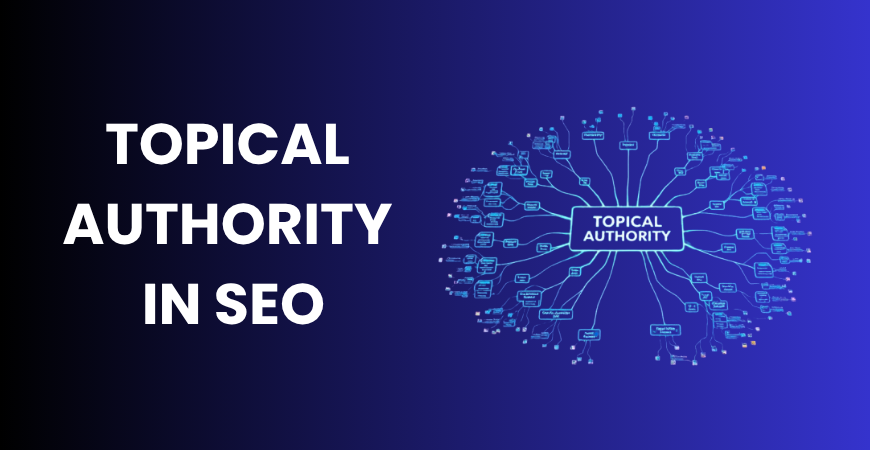
8. Your Website Lacks Topical Authority
Publishing unrelated content across many subjects can make it difficult for a website to establish strong topical relevance. Competitive SEO requires more than a collection of individual articles.
Suppose a website wants to build authority around SEO. It could create related content covering keyword research, technical SEO, on-page optimization, content strategy, internal linking, SEO audits, and other relevant subjects.
These connected topics create a stronger content ecosystem and help demonstrate consistent expertise within a subject.
A structured SEO content strategy can help organize these topics into clusters, identify content gaps, and prevent unnecessary duplication.
9. Your Website Doesn’t Have Enough Authority
If you’re still trying to understand why your website is not ranking despite having useful and optimized content, compare your website with the competitors appearing above you. They may have stronger backlinks, established brand signals, and greater authority within their industry.
Authority can be strengthened through:
- Relevant backlinks
- Industry publications
- Digital PR
- Expert contributions
- Partnerships
- Legitimate brand mentions
Quality matters more than quantity. A few relevant links from trustworthy websites can be more strategically valuable than a large number of unrelated or low-quality links.
Authority building also takes time, so newer websites should combine long-term authority development with realistic keyword targeting.
10. Your Website Provides a Poor User Experience
A relevant page can still underperform if visitors struggle to use the website. Slow pages, confusing navigation, poor mobile usability, intrusive pop-ups, and difficult-to-read content can all create unnecessary friction.
Check whether visitors can:
- Navigate the website easily
- Read content comfortably on mobile
- Find important information quickly
- Complete forms without difficulty
- Understand what your business offers
- Move between related pages naturally
SEO should not be treated as an exercise focused only on search engines. A website that is fast, accessible, useful, and easy to navigate provides a better experience for the people who ultimately matter most: your customers.
How Digiad Solution Can Help Fix Ranking Problems
At Digiad Solution, we focus on identifying the actual reasons behind poor search visibility instead of applying the same SEO tactics to every website.
Our approach can include SEO audits, keyword research, on-page optimization, technical SEO, content planning, internal linking, and authority building. By combining these areas, we help businesses build stronger organic visibility around relevant searches and create a sustainable SEO foundation.
Frequently Asked Questions
Why is my website not ranking on Google?
Common reasons include indexing problems, poor keyword targeting, search intent mismatch, weak content, on-page SEO issues, technical problems, weak internal linking, limited topical authority, insufficient external authority, and poor user experience.
Why is my website indexed but not ranking?
If you’re still asking why your website is not ranking after making SEO improvements, remember that indexing does not guarantee visibility. The page may still have weak relevance, poor content, technical issues, low authority, or strong competition.
How long does it take for a website to rank on Google?
There is no fixed timeline. Results depend on competition, website authority, content quality, technical health, keyword difficulty, and the consistency of SEO improvements.
Can poor content prevent my website from ranking?
Yes. Content that doesn’t satisfy search intent or provide enough useful information may struggle against more relevant and comprehensive pages.
Conclusion
Understanding why your website is not ranking starts with finding the actual problem rather than randomly adding keywords, publishing more content, or building backlinks. Check indexing first, then review keyword targeting, search intent, content quality, on-page SEO, technical health, internal linking, topical authority, external authority, and user experience. Once you identify the areas holding your website back, prioritize the highest-impact fixes and monitor their performance consistently.