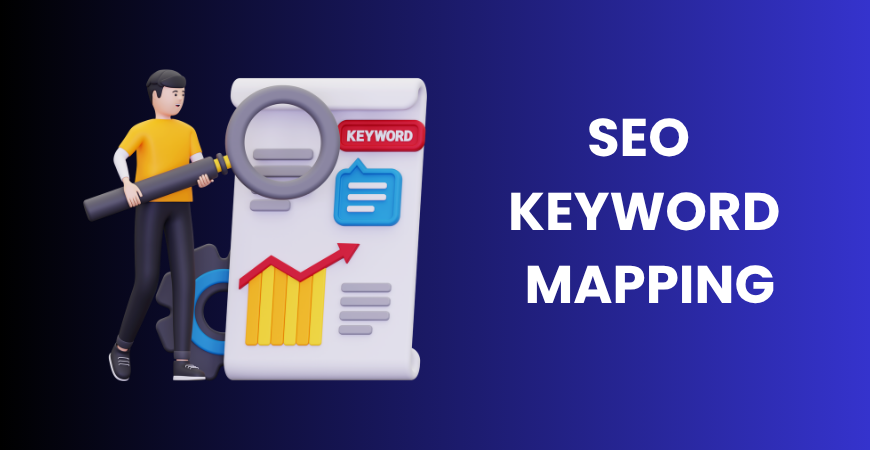
You can have a long list of valuable keywords and still struggle to improve rankings. Often, the problem is not the keywords themselves but where you use them. SEO keyword mapping connects target keywords with the right pages, helping search engines and users understand which page should address a particular search.
Think of it as turning keyword research into a website plan. Instead of trying to rank every page for similar terms, you decide which page should target each search intent, where supporting keywords belong, and whether new content is actually needed.
What Is SEO Keyword Mapping?
SEO keyword mapping is the process of assigning relevant keywords to specific website pages based on search intent, page purpose, and business relevance.
For example, a digital marketing website might map keywords like this:
| Keyword | Intent | Target Page |
| digital marketing agency | Commercial | Agency service page |
| SEO services | Commercial | SEO service page |
| SEO pricing | Commercial/Informational | Pricing guide |
| what is SEO | Informational | SEO guide |
| SEO reporting | Informational/Commercial | SEO reporting article |
Keyword research tells you what people search for, while keyword mapping determines where those searches should be addressed.
It also fits into a broader SEO strategy, connecting keyword targeting with content planning, website structure, and on-page optimization.
Why Is Keyword Mapping Important for SEO?
A keyword map gives important search terms a logical destination. Without one, websites can end up with overlapping pages, missed content opportunities, or keywords assigned to pages that do not match search intent.
1. Targets the Right Keyword on the Right Page
Different searches require different types of content. Someone searching for “SEO pricing” may want costs and pricing models, while someone searching for “what is SEO” probably wants an explanation.
Mapping keywords by intent helps informational searches lead to useful content and commercial searches to relevant service or product pages.
2. Reduces Keyword Cannibalization
Keyword cannibalization can occur when several pages target the same or very similar search intent.
For example, three articles about “SEO strategy” may overlap heavily if they offer essentially the same information. Mapping makes such overlaps easier to identify so pages can be differentiated, consolidated, redirected, or repositioned when appropriate.
3. Creates a Clearer Website Structure
A keyword map shows how search topics are distributed across service pages, product pages, and informational content. It also makes internal linking strategy easier because related pages and their purposes are clearly defined.
4. Reveals Content Gaps
If keyword research identifies an important topic but no existing page properly addresses it, the map highlights a potential content gap.
This helps you create content where it is genuinely needed instead of publishing another generic article.
5. Organizes SEO Work
Keyword mapping connects keyword research with content creation, on-page optimization, internal linking, and performance tracking. It gives writers and SEO teams a common reference for what each page is supposed to target.
What Should a Keyword Map Include?
A simple spreadsheet is often enough for smaller websites. Useful fields include:
| Column | Purpose |
| Keyword | Target search term |
| Search Intent | Informational, commercial, transactional, or navigational |
| Target Page | Page intended to rank |
| Keyword Role | Primary or supporting |
| Page Status | Existing, planned, or needs optimization |
| Priority | Importance to the business |
You can also include search volume, current ranking, traffic, or conversion data when useful. However, search volume should not be the only factor. A lower-volume keyword with strong commercial relevance may be more valuable than a high-volume term with little business intent.
How to Create an SEO Keyword Map Step by Step
Step 1: Start With Your Keyword List
Collect relevant core terms, long-tail queries, variations, and related searches. Avoid assuming that every variation needs its own page.
Step 2: Group Related Keywords
Group terms that cover the same topic and search intent.
For example:
- SEO pricing
- SEO costs
- SEO service pricing
- how much does SEO cost
These may be suitable for one comprehensive page rather than several thin articles.
Step 3: Identify Search Intent
Determine whether each keyword is:
- Informational: looking for information
- Commercial: comparing services or options
- Transactional: ready to take action
- Navigational: looking for a particular website or brand
Search intent should influence the type of page you assign.
Step 4: Assign a Primary Keyword
Give each important page a clear primary target. Closely related terms can work as supporting keywords instead of creating separate pages for every variation.
Step 5: Match Keywords to Existing Pages
Review your current pages before planning new ones. An SEO audit checklist can help identify existing targets, weak pages, and keyword overlaps.
This prevents unnecessary content creation.
Step 6: Identify Keywords That Need New Pages
If an important keyword has no suitable page, decide whether a new page is justified based on search intent, business relevance, existing content, and potential overlap.
Step 7: Check for Keyword Cannibalization
Review the map for multiple pages targeting the same keyword and intent. If overlap exists, determine whether the pages need clearer differentiation or consolidation.
Step 8: Prioritize the Work
You can roll out SEO changes in stages instead of trying to optimize every page at the same time. Prioritize pages based on business importance, existing visibility, search intent, and the effort required.
A realistic SEO timeline can help organize implementation into manageable stages.
Example of an SEO Keyword Map
Consider this simplified example:
| Keyword | Intent | Page | Action |
| digital marketing agency | Commercial | Agency page | Optimize |
| SEO services | Commercial | SEO service page | Optimize |
| SEO pricing | Commercial/Informational | Pricing guide | Existing article |
| what is SEO | Informational | SEO guide | Existing article |
| SEO reporting | Informational/Commercial | Reporting guide | Create or optimize |
The important point is that every keyword has a logical destination rather than being forced onto the homepage or another unrelated page.
When implementing the map, best SEO practices such as useful content, descriptive titles, clear headings, relevant internal links, and search-intent alignment should guide optimization.
Common SEO Keyword Mapping Mistakes
Targeting Too Many Keywords on One Page
A page cannot effectively satisfy unrelated search intents. Keep its primary topic clear.
Creating a Page for Every Keyword Variation
Similar keywords often have overlapping intent. Creating separate pages for each variation can result in repetitive or thin content.
Ignoring Search Intent
Search volume alone does not tell you what type of content searchers expect. Review the actual search results and understand the intent behind the query.
Ignoring Existing Pages
Always check whether an existing page could be improved before creating another one.
Never Reviewing the Map
Your website and search landscape change over time. Review keyword assignments when new content is published, pages change, or performance patterns suggest an adjustment.
How Digiad Solution Approaches Keyword Mapping
At Digiad Solution, keyword mapping can be used to connect search demand with the pages most capable of addressing it rather than simply creating a large keyword list.
The process should consider business goals, audience, website structure, existing content, search intent, and the relationship between informational and commercial pages. This helps determine whether a keyword belongs on an existing page, needs a new resource, or should be treated as a supporting term.
Businesses considering SEO services can ask an agency:
- How are keywords assigned to pages?
- How is search intent evaluated?
- How are overlapping pages identified?
- Are existing pages reviewed before new content is created?
- How is performance tracked after implementation?
The exact process varies between agencies, but the important principle is that keyword research should lead to clear page targeting and actionable SEO work.
Performance can then be reviewed through SEO reporting to see whether targeted pages are gaining relevant visibility, clicks, rankings, or business outcomes.

Frequently Asked Questions
What is SEO keyword mapping?
SEO keyword mapping assigns relevant keywords to specific website pages according to search intent, page purpose, and business relevance.
Why is keyword mapping important for SEO?
It helps target relevant searches on appropriate pages, reduce keyword overlap, identify content gaps, and organize SEO work.
How do I create a keyword map?
Start with keyword research, group related terms, identify search intent, assign primary keywords to pages, review existing content, identify gaps, check for cannibalization, and prioritize implementation.
Can multiple pages target the same keyword?
They can, but there should be a clear reason. If multiple pages satisfy the same intent, they may compete unnecessarily with each other.
What is the difference between keyword research and keyword mapping?
Keyword research identifies relevant searches. Keyword mapping assigns those searches to the pages that should address them.
Conclusion
SEO keyword mapping turns keyword research into a practical website optimization plan. It helps determine which page should target each search, reduces unnecessary overlap, identifies content gaps, and connects search intent with page purpose. Instead of asking only which keywords you should rank for, ask which page should provide the best answer to each search. That simple shift can make SEO planning more organized and purposeful.